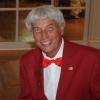
African American culture and voices have played a key role in Paducah's history, including the inspiring stories of Dr. Dennis Henry Anderson, William Stuart Nelson, Robert Crider, and Fate Marable. Paducah Ambassador and local historian Roy Hensel walks us through their lives and the impact they've had in Paducah and beyond.
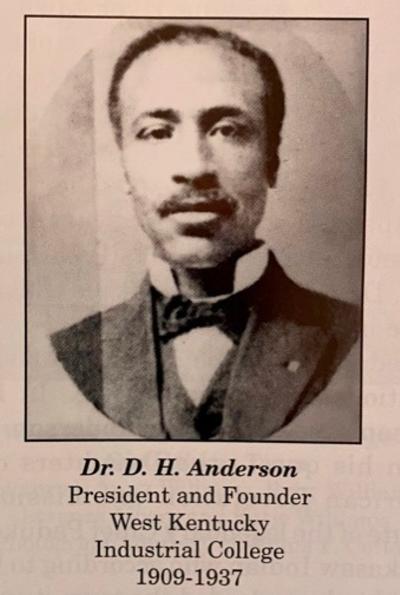
Dr. Dennis Henry Anderson
Dr. Dennis Henry Anderson was a man who had great insight, determination, perseverance, and selflessness. He was truly an amazing man. As with most of the “Oak Grove residents” I’ve been writing about, the more I dug into his story, the more interesting and inspiring it became.
Dr. Anderson was born of very humble beginning, the year after the Civil War ended, in 1866 near Jackson, Tennessee. As an African American, he overcame many obstacles to achieve greatness. He came out of the cotton fields to get an education at Lane College in Jackson, Tennessee. In 1893, he became a Methodist minister and teacher. In 1897, he married Artelia Harris, a native of Virginia. Both Anderson and his wife taught at Fulton County schools and eventually opened schools in Fulton and Graves Counties, raising funds for the building of the first high school in Fulton County in 1905. Dr. Anderson believed education and job training were vital to change the future of African Americans. He came to Paducah in 1909 determined to give “proper educational opportunities” to African Americans and immediately went to work fundraising to build the West Kentucky Industrial School.
With his own hands and borrowed tools, under a lamp held by his wife, Anderson personally dug the foundation of the first college building, “out of logs and faith.” From his meager earnings, he helped pay for students who needed assistance. His wife, who taught in a rural school, put most of her salary into the college fund.
In 1912, Dr. Anderson was the first African American to make a serious plea before the Legislature of Kentucky. He had a bill written to earmark $17,000 for the school. The bill failed. Bound and determined to succeed, he went back to Frankfort on a borrowed motorcycle in 1914, a trip that nearly cost him his life. The cycle threw him on a rocky road near Louisville which broke his shoulder and seriously injured his eye. A country doctor ordered him to a hospital, but he never got there. Instead, Dr. Anderson showed up in Frankfort, riding a battered motorcycle, and carrying his arm in a sling.
The legislators were impressed, but not enough. The bill passed the Senate but failed in the House. In 1916, the House again rejected Anderson’s bill. Success finally came in 1918, when the school was granted the funds “for the mental, moral, and physical development of the colored people after the manner of Booker Washington School of Alabama,” for the purpose of operating a “training school for colored teachers, boys and girls.” The school grew to be the second largest Black junior college in the U.S.
In 1938, the teacher training program at the college was transferred to Frankfort and the college closed and reopened as the West Kentucky Vocational College. After 20 years, Dr. Anderson’s dream of the school’s becoming a complete vocational school finally came true. It was the only institution of its kind in the nation.
Anderson was awarded an honorary Doctor of Laws degree from Lane College in 1934. He later retired as president but kept up with the activities of the school, living in a room in one of the school buildings at 1415 Atkins Street. He survived on his meager retirement pension as well as income he received as chaplain of the school, spending all the money he made for improvements of the schools. He even paid tuition for hundreds of students who wouldn’t have been able to attend otherwise. Dr. Anderson died in 1952 at the age of 86.
The school underwent several changes through the years. It has been West Kentucky Industrial College, West Kentucky Technical College, and eventually changed to West Kentucky State Vocational and Technical College. The campus moved from the H.C. Mathis Drive area to next to Paducah Community College in 1979. In 1998, it became West Kentucky Tech and joined the KCTCS system, and finally, in 2003, the two schools merged to become the present West Kentucky Community and Technical College.
Dr. Anderson may well have thought “I have a dream” when it came to his passion for “proper educational opportunities” for the African Americans in this region and throughout Kentucky. There is a monument at the Anderson Building on the WKCTC campus commemorating and honoring this great educator.
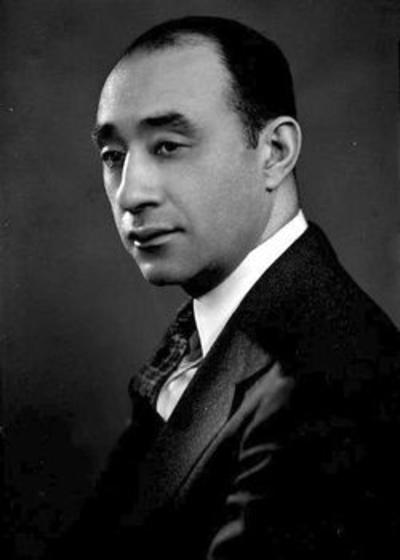
William Stuart Nelson
William Stuart Nelson was born in Paris, Kentucky in 1895. His parents were Dr. W.H. Nelson and Emma Nelson. Shortly after he was born, the family moved to Paducah where his father set up a practice. An ad in the Paducah Sun in 1897 lists Dr. Nelson as a physician and surgeon. He later became an Assistant City Physician, a position he held for many years.
William was raised in Paducah and graduated from Lincoln High School. He was one of 72 Black soldiers who left Paducah on April 2, 1918 to go “over there” during World War I. About 5,000 people gathered to send off the train which carried the soldiers to Camp Z. Taylor. Dr. W.H. Nelson led the patriotic march to the station and it was the largest group to witness a departing of soldiers during the war. About 500,000 African Americans served in World War I.
Black soldiers were segregated in the war, and were never given the respect they should have received. William Stuart Nelson witnessed this and it changed his life. After the war, he attended Howard University in Washington, D.C. From there, he went on to attend Yale and earned a Bachelor of Divinity degree.
Nelson, having served in France, returned there to study at the Sorbonne and the Protestant Theological Seminary in Paris. In 1940, he become Dean of the School of Religion at Howard University. He later became the first African American President of Shaw University in Raleigh, N.C. and then the first President of Dillard University in New Orleans, before finally returning to Howard as Vice President.
Nelson developed the philosophy of the nonviolence strategy and wrote many articles and books. He became an international expert on nonviolence. In 1941, he participated in the march on Washington. He made several trips to India, and in 1946, marched with Gandhi. He frequently corresponded with Dr. Martin Luther King, Jr. and in 1965, he joined King in the Selma to Montgomery March.
Nelson returned several times to Paducah for speaking engagements. In 1938, Dr. Nelson spoke at the Paducah Colored Park. On that day he was joined by the mayor, city commissioners, and many African Americans as the park was rededicated and named Stuart Nelson Park.
Stuart Nelson was a man of many accomplishments, including being a member of the Gandhi Peace Foundation, a prison chaplain, and organizer of many churches in the D.C. area. Howard University established the Stuart Nelson Scholarship in his honor.
Nelson died in 1977 near his beloved Howard University. A son of Paducah, his mark was left all over the world.
Robert Crider
The Battle of Paducah took place on March 25, 1864. Fort Anderson was defended from attack by Confederate General Nathan B. Forrest and almost 3,000 confederate soldiers. The Union army in the fort contained 120 men from the 122nd Illinois Infantry, 271 from the 16th Kentucky Cavalry, and over 200 from the 8th United States Colored Heavy Artillery. The Union lost 90 lives and the Confederates lost 50. But this is the story of a father and son who joined the army in Paducah the next day.
At the time, enslaved people who enlisted in the army were later granted freedom in exchange for their service. In February of 1864, Secretary of War Edwin Stanton authorized the recruitment of African Americans by the Union Army in Kentucky and by March, 264 Black men had enlisted. From this was born the 1st Kentucky Heavy Artillery of African Descent who were almost all from the Paducah area.
This group’s name was later changed to the 8th U.S. Colored Heavy Artillery. Fort Anderson’s commander, Colonel Stephen Hicks, originally opposed enlistment of African Americans, but after the battle of Paducah, his prejudice was challenged and he compared the group to the best troops he had fought with during the war. In an article from the New York Tribune on March 29, 1864, about the battle of Paducah, Hicks stated about the 8th, “They were in front, 220 in all, and fought with great gallantry.”
This begins the story of Robert Crider who was born in Caldwell County and enlisted at 44 years old. His sons, Samuel and Isaac, followed in their father’s footsteps, enlisting on the same day. All three Criders were enlisted on March 26, 1864 by an S. Dobson.
In September of 1864, Samuel’s story took a tragic turn. According to official records, he was murdered in Mayfield at the Company quarters. Another record states he was “killed by violence in Mayfield, KY” on September 22, 1864. His brother Isaac signed with his X a receipt to pick up Samuel’s personal items after the tragedy. He collected all that Samuel owned: a forage cap, uniform jacket, and a rubber blanket.
After the battle of Paducah, Robert served as a company cook. He went on to fight in a skirmish at Haddix Ferry in Marshall County in July 1864. In May of 1865, Robert served as a nurse at the hospital in City Point, Virginia where, just one month before, President Lincoln had visited and had a dream he was going to be assassinated. Lincoln’s dream came true one week later.
Although Robert’s age is listed as 44 in 1864, his age on his gravestone at Oak Grove Cemetery is 105, which, since it states he died in 1907, would make him about 62 years old in 1864. Could it be that Robert lied about his age so he could join the army? His wife Martha died the next year, at age 115. The Criders are the oldest couple buried in Oak Grove.
Although there is no gravestone found for Samuel, he was most likely buried in Mayfield. Isaac, who also fought in the Spanish American War, rests in Metropolis, Illinois.
But there were so many other brave men who fought in these “colored troops.” Some of the other soldiers in local cemeteries include Phillip Trigg from Paducah. In the Smithland Cemetery lies Edward Dobson of Company A of the 8th USCHA, possibly related to the man who enlisted the Criders. In Oak Grove are at least four other military graves, marking the brave men who fought for the “U.S. Colored troops.” Scott Woolfork was in Company A of the 8th USCHA, George W. Watson was with Company A of the 4th USCHA, Richard Archer fought in Company K of the US Colored Infantry, and Sergeant James Bell was in Company I of the 16th USC Infantry. In nearby Smithland lies Edward Dobson, from Company A of the USCHA, possibly related to the Criders’ recruitment officer.
The 8th was eventually sent to Texas where it was mustered out of service in February of 1866.
What bravery it took for this father and his sons, along with countless other African Americans, to join up and fight for their freedom
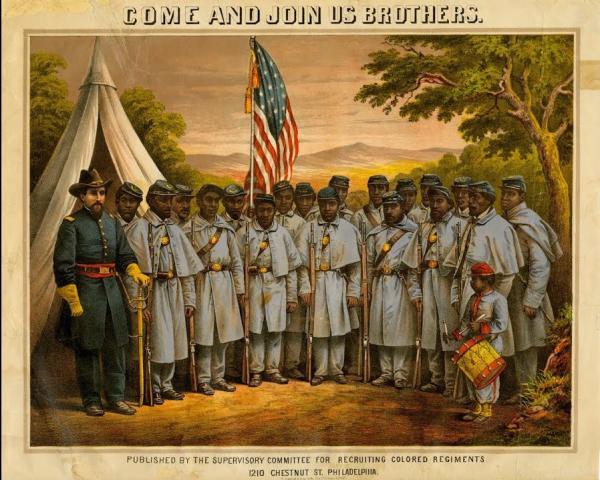
Photo Credit: Harry T. Peters "America on Stone" Lithography Collection, https://americanhistory.si.edu/.../search/object/nmah_516030
Fate Marable
Fate Marable was born in Paducah in 1890. His mother was a piano teacher, and when she heard Fate pecking at the keys, she decided to give him lessons in reading music and playing piano. At 17, Marable was shining shoes in Paducah as he continued to nourish his unique talent which “made the keys jump under his fingers.”
In 1907, Marable got his first musical job playing on steamboats on the Mississippi River. There was a catch, though. One of his responsibilities was to play the large steam calliope. Steam would stream through the brass pipes and whistles at 80 pounds of pressure. The keys were hot and hard to hold down and the volume was overwhelming, so Marable wore gloves, stuffed his ears with cotton, and wore rain gear.
Within a short time, he became the bandleader on the line, which ran from New Orleans to St. Paul. He held that position for 33 years, until 1940, mostly playing on board the SS Capitol. Over the years, Marable became a legendary figure in river boat jazz. In fact, his band became the first African American organization to play on the excursion boats.
Marable was a strict bandleader. Many of his band members played by ear, so he had them taught to read music and expected them all to learn to play sheet music on sight. He boosted many of his musicians’ careers; Cab Calloway, Count Basie, Duke Ellington, and Fats Waller all played under Marable’s direction.
Marable was scouting for talent in New Orleans when he discovered a teenager blowing a cornet. That teenager was named Louis David Armstrong, and Marable gave him his first big break. Armstrong described his time with Marable as “going to the University,” since he learned to read music and gained wide experience working with written arrangements.
Armstrong eventually switched to playing the trumpet, and Marable called this “sweet-lipped” kid of 18 his “Satchel-mouthed trumpeter.” Armstrong was nicknamed Sachmo and worked with Marable’s band from 1918 to 1921 as he developed his craft. When traveling through the Paducah area on the “chitlin circuit” as it was called, Louis Armstrong stayed at the Hotel Metropolitan, which is a stone’s throw from the site where Marable was born.
By 1921, Marable’s band was considered the best dance band in the United States. In 1924, the “Cotton Pickers,” which was the name of the band (later also called the “Society Syncopators”), made their first and only record, “Frankie and Johnny.”
By 1940, Marable was working at many different clubs in the St. Louis area, both with a band and playing solo. He became sick and died of pneumonia in 1947 at age 56. His body was brought back to Paducah for burial in Oak Grove Cemetery, but he left a great legacy of a new kind of music. The music world is greatly indebted to this son of Paducah.
Photo: Fate Marable Band on the Steamer "Capitol" in 1920. L-R: Henery Kimball, bass; Boyd Atkins, violin; Johnny St. Cyr, banjo and guitar; David Jones, sax and alto horn; Norman Mason, sax; Louis Armstrong, cornet; Norman Brashear, trombone; Baby Dodds, drums; Fate Marable, piano.
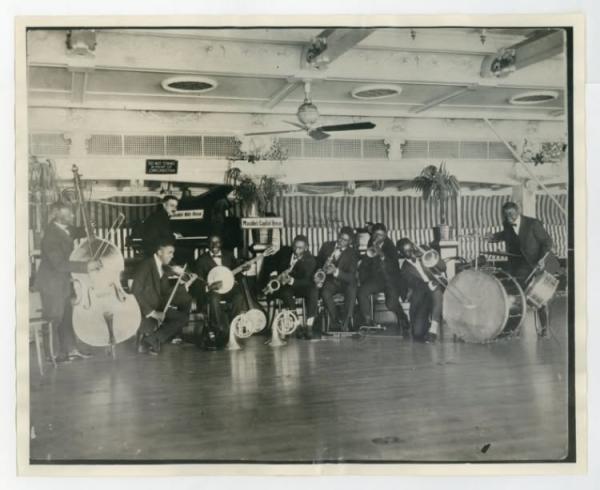
Photo Credit: Louisiana Digital Library, Louisiana State Museum, New Orleans Jazz Museum Collection